

 September 7, 2026
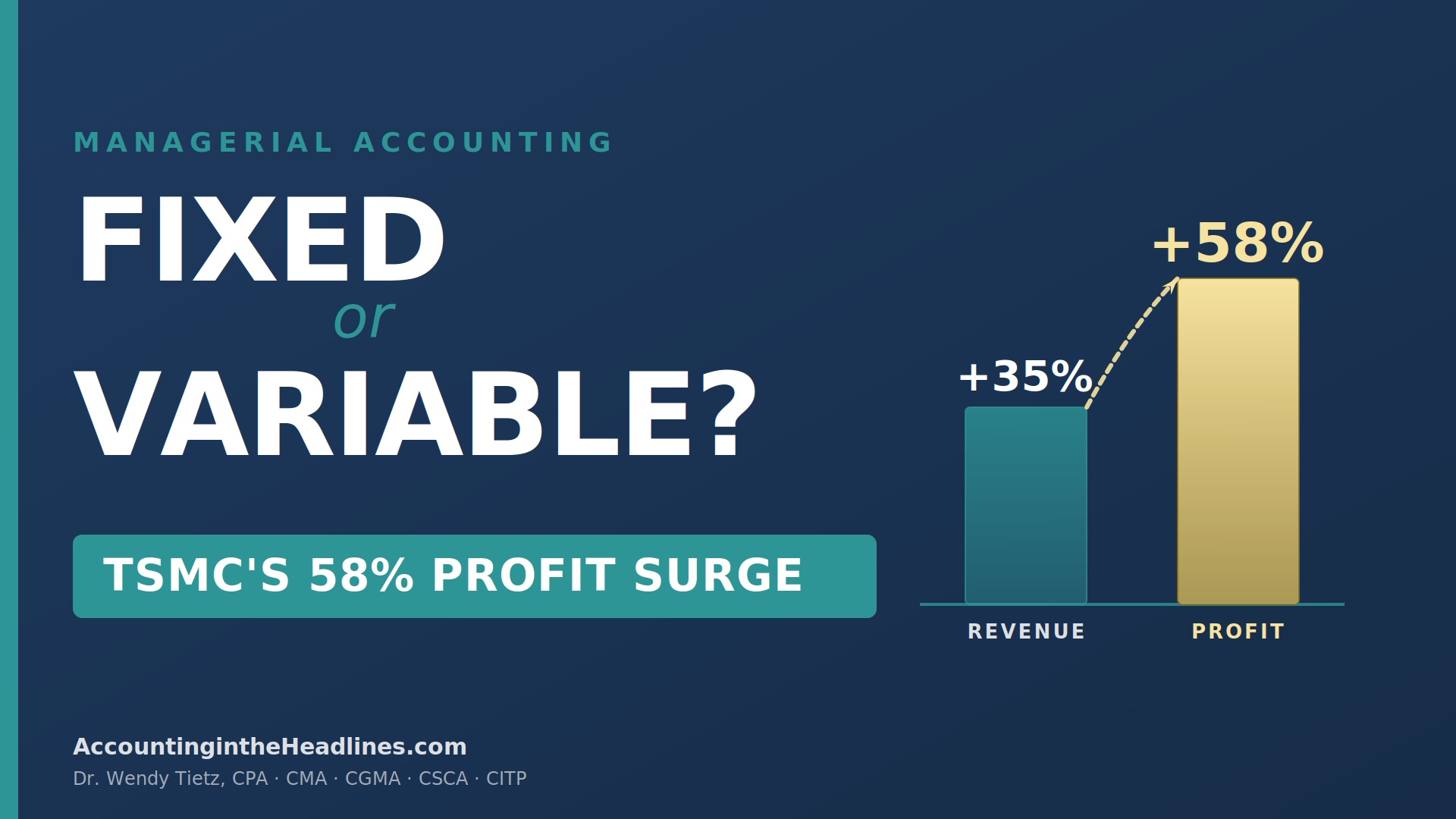
Taiwan Semiconductor Manufacturing Company (NYSE: TSM), commonly known as TSMC, is the world’s largest contract chipmaker. On April 10, 2026, TSMC reported first quarter 2026 revenue of $35.7 billion, a 35% jump from the same quarter a year earlier. A few days later, the company reported that its first quarter net profit had surged 58%, reaching a new record high. Both numbers beat analyst forecasts. The growth is being driven almost entirely by surging demand for advanced chips that power artificial intelligence applications at customers like Nvidia, Apple, and large cloud computing providers.
Notice the gap between the two percentages. Revenue grew 35%, but profit grew 58%. That difference is not random. It reflects TSMC’s cost structure: the company has massive fixed costs (tens of billions of dollars invested in semiconductor fabrication plants, depreciation on that equipment, salaried engineers, and facility utilities) and relatively lower variable costs per wafer produced. When a company with a high-fixed-cost, low-variable-cost structure grows its sales, each additional dollar of revenue has a relatively high contribution margin, so it drops disproportionately into operating income. This phenomenon is called operating leverage, and TSMC’s Q1 2026 results are a near-perfect real-world example of it.
View a quick tutorial video at this [link] and then answer the following questions.
Note to instructors: This post is assignable in Pearson’s MyLab and has questions that are auto-graded.
Discussion Questions
1. Explain in your own words why TSMC’s profit grew faster than its revenue in Q1 2026. How does the company’s cost structure contribute to this result?
2. Would you expect a company with mostly variable costs, for example a small consulting firm that pays contractors only when projects are won, to show the same pattern as TSMC? Why or why not?
3. Operating leverage can amplify gains when sales rise, but it can also amplify losses when sales fall. What would likely happen to TSMC’s operating income if AI chip demand suddenly dropped by 20%? Why?
4. If you were a competing chipmaker considering whether to build your own fabrication plant or to outsource production to a company like TSMC, how would the concept of operating leverage factor into your decision?
5. TSMC has raised its 2026 capital expenditure guidance to between $52 and $56 billion, most of which will go toward advanced chip manufacturing capacity. How will that additional capital spending most likely affect TSMC’s degree of operating leverage in future years? Explain your reasoning.


No comments yet... Be the first to leave a reply!