

 September 7, 2026
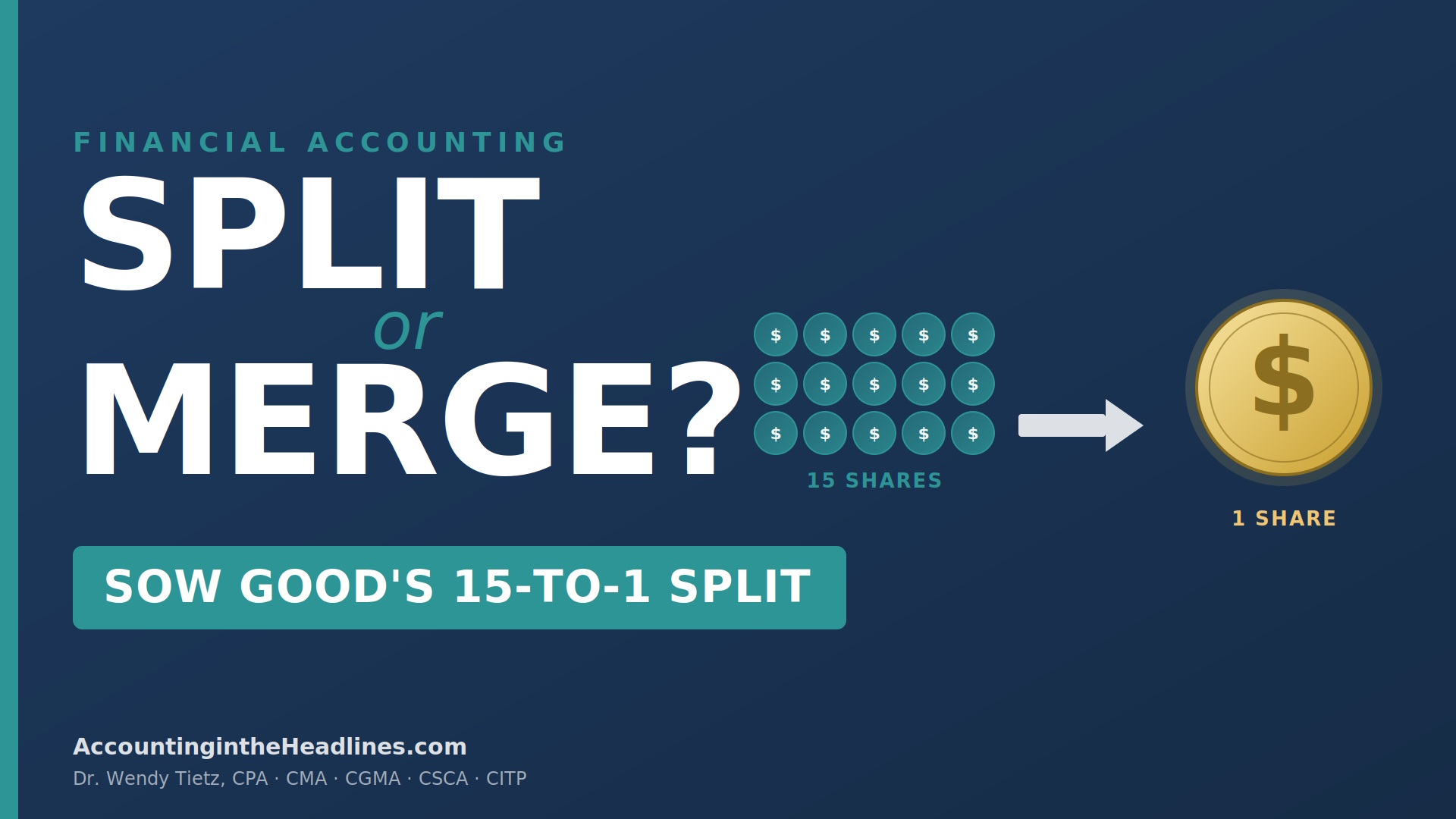
Sow Good Inc. (NASDAQ: SOWG), a Texas-based company that pioneered the freeze-dried candy category, announced a 15-to-1 reverse stock split of its common stock on April 17, 2026. The reverse split became effective at 5:00 p.m. Eastern Time on April 23, 2026, and the stock began trading on a split-adjusted basis on April 24, 2026.
Immediately before the reverse split, Sow Good had approximately 300,801,347 shares of common stock outstanding. After the 15-to-1 reverse split, the number of shares outstanding dropped to roughly 20,053,424. The par value of the common stock remained at $0.001 per share, and the company continues to trade under the ticker symbol SOWG.
Sow Good stated that the reverse stock split was being implemented to help the company regain compliance with the Nasdaq minimum bid price requirement, which generally requires a listed stock to maintain a closing bid price of at least $1.00 per share. In a reverse stock split, every existing share is combined into a smaller number of shares. Shares outstanding go down and the per-share market price goes up proportionally, but total stockholders’ equity does not change as a direct result of the reverse split.
View a quick tutorial video about reverse stock splits at this [link] and then answer the following questions.
Note to instructors: This post is assignable in Pearson’s MyLab and has questions that are auto-graded.
Discussion Questions
1. What is a reverse stock split, and how is it different from a traditional (forward) stock split?
2. Sow Good implemented its reverse stock split to regain compliance with the Nasdaq minimum bid price requirement. Why might a company want to maintain a stock price above a certain level, beyond just meeting exchange listing rules?
3. How does Sow Good’s 15-to-1 reverse stock split affect the number of shares outstanding, the par value per share, and total stockholders’ equity?
4. Assume the market price of Sow Good’s stock was approximately $0.30 per share immediately before the reverse split. What would you expect the per-share price to be immediately after the 15-to-1 reverse split, all else equal?
5. Reverse stock splits are sometimes viewed as a negative signal by investors. What aspects of Sow Good’s situation might explain why some investors interpret a reverse stock split as bad news?


No comments yet... Be the first to leave a reply!